
How Kids’ Yoga Helps in Classrooms: Focus, Self‑Regulation and Calmer Transitions
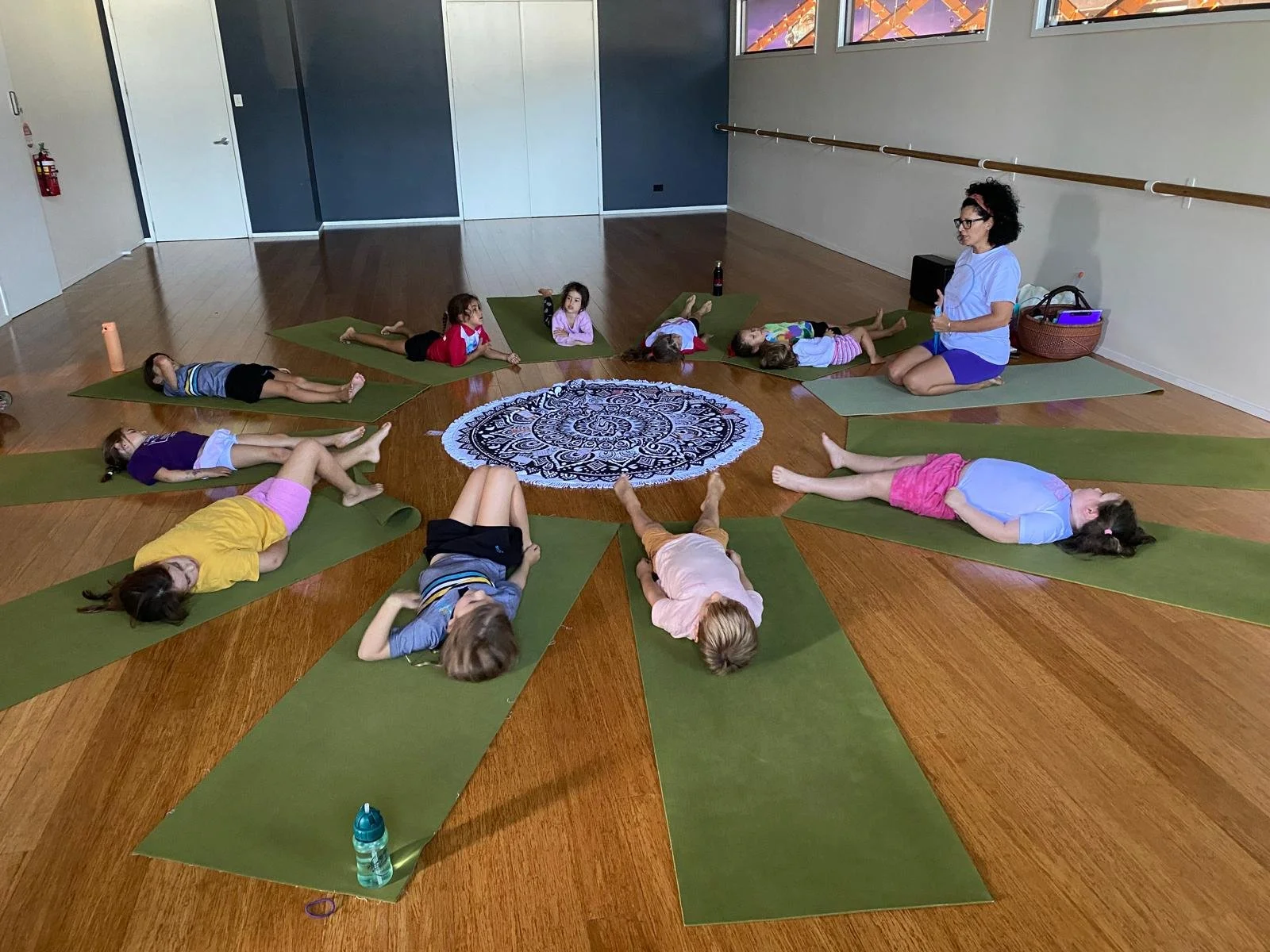
Why movement‑plus‑mindfulness belongs in primary schools
Primary learners spend a big part of their day switching gears—from playground to literacy, from group work to quiet reading. Short, age‑appropriate routines that combine movement, breath and quiet finishes help students reset quickly. The result is fewer wobbly transitions, more attention for the next task, and a kinder class climate.
What it looks like in practice (three teacher‑ready routines)
Three‑breath reset (20–30 sec): Inhale through the nose, exhale like a soft dragon sigh. Use a consistent cue: “Ready bodies, quiet minds.” Works well at the door or carpet.
Balance break (45 sec): Stand tall, grow “tree roots” into the floor, find a focus point, breathe for three counts, swap sides. Great after a long sit.
Desk‑side twist (30 sec): Sit tall, twist gently to one side, breathe, change sides. A simple way to refresh before independent work.
How it maps to the Australian Curriculum (HPE V9)
Self‑management: Students notice arousal and apply a settling strategy. Language: “I can choose a breath tool.”
Movement competence: Balance, coordination and posture are practised through fun, functional shapes.
Personal & social capability: Partner games rehearse co‑operation, respect and encouragement.
Health literacy: Students learn when and why to use a strategy (e.g., “before a test” or “after lunch”).
Incursions: what schools can expect
A typical rotation day offers 45–50 minute sessions by year band (P–2, Years 3–4, Years 5–6) in a hall, MPR or cleared classroom. Teachers receive a reinforcement card with one breath tool, one movement micro‑break and a closing routine they can use all week. Term blocks deepen the routine until it becomes part of the class culture.
Inclusion, behaviour and SEN
Sessions use calm cues, short tasks and lots of visual demonstration. There are alternatives for sensory needs and a quiet corner option. We avoid hands‑on adjustments without consent. Because activities are short and predictable, behaviour spikes tend to decrease; students know what’s expected and what happens next.
Measuring impact (light‑touch and realistic)
Entry/exit checks: A quick “thumbs scale” (up/side/down) for readiness can show shifts in focus.
Teacher notes: A one‑minute reflection at week’s end—“When did the breath cue help?”—builds teacher insight.
Student language: Listen for students using the cues themselves (“I’m doing my starfish hand”). That autonomy is the goal.
Addressing common concerns
Time pressure: Routines are seconds, not minutes. They pay back in faster settling and less correction time.
Religious concerns: Our language is secular and inclusive; we focus on health, wellbeing and classroom climate.
Space: A classroom can work with desks moved; a hall is ideal for larger groups.
Next steps for schools and OSHC
Ask for our HPE V9 mapping and term‑block options. We’ll tailor a plan by band, space and timetable.
